

HTTP and MQTT are two prevalent protocols in the IoT domain. Nevertheless, HTTP and MQTT represent two sides to the same puzzle, and it’s up to businesses to leverage them accordingly.
What Is HTTP?
The Hypertext Transfer Protocol (HTTP) is the underlying protocol of the World Wide Web. The contents of one’s web browser go through an HTTP request. This request goes to a server in the cloud that responds with the requested web page.
As a simple-to-deploy and straightforward command-request protocol, HTTP proliferated quickly after its inception in the early 1990s.
What Is MQTT?
The phrase “necessity is the mother of invention” aptly summarizes the history of Message Queue Telemetry Transport (MQTT). In 1999, after IBM landed a large-scale oil and gas project, it realized it needed a lightweight communications protocol to link sensors on oil pipelines with communications satellites. MQTT would redefine the effectiveness of machine-to-machine communications at every level.
What Are the Main Differences?

HTTP is typically a transient interface in which each request is a short-lived session. MQTT sessions are long-lived.
Another important difference is that HTTP operates on a command-request basis. A command gets sent to the server and a response returns. The endpoint, browser or small-footprint device must initiate that transaction to the server every time.
However, MQTT uses a concept known as publish-subscribe. The messages can be initiated at either end. It also utilizes a broker (or an aggregator and a distributor of messages) that allows the client device to speak to thousands of endpoints instead of just one.
Disadvantages and Advantages of Each
MQTT takes messaging to another tier altogether. However, it is more complicated than HTTP, which is straightforward and uses easy-to-read ASCII characters. MQTT is also harder to use, as it is bidirectional and can support both ASCII and binary payloads.
Because HTTP transactions are essentially automatic, the security context must be provided for each message, creating significant overhead. On the other hand, MQTT uses a broker and the concept of a persistent connection. Security criteria are only required for the first connection, creating an immediate performance boost.
Moreover, in controlled performance tests between MQTT and HTTP, MQTT can move the same amount of data 80 to 100 times faster than HTTP. With HTTP, companies must pay a premium for their data plan message by message. MQTT is much more affordable in this regard. In addition, firmware updates and configuration changes for edge devices are simpler through MQTT.
HTTP vs. MQTT for IoT Use Cases
For a cloud platform, IoT devices are typically going to communicate over MQTT because its bidirectional. Still, the other side of the cloud will need HTTPS to let users pull data for dashboarding and analytics. In essence, most of the interactions on the back end for data visualization are over HTTP. However, MQTT is better in the front end, where the transactional commands and raw data come in and out.
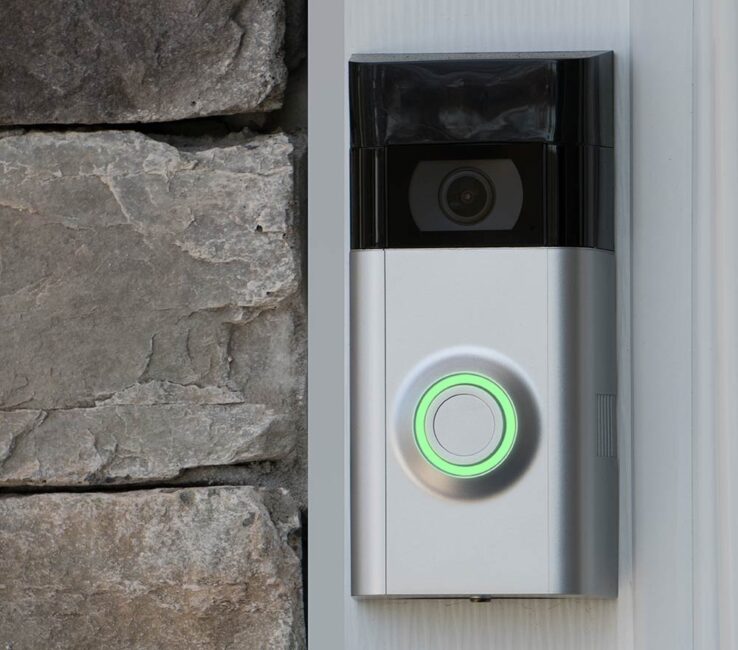
Picture a smart connected doorbell with a video camera: The device will activate and initiate a connection over HTTP when someone steps into view. Yet the video will establish an MQTT stream to move that data rather than pumping that information individually over HTTP messages.
How Does Telit Cinterion Fit?
We are uniquely positioned in the marketplace as many of our IoT modules already have HTTP and MQTT protocols built into them. Our suite of IoT solutions can optimize your IoT operations and drive ROI. In addition, our fully functional cloud platform allows devices of all kinds to connect.
Speak with our IoT experts to discover how we can simplify and scale your IoT deployment.
Request a Consultation